
Zellige Tile Guide: Choosing Handmade Clay
Zellige is handmade glazed clay tile, loved for its soft light, uneven edges and colour that moves from tile to tile.

Arta's zellige collection
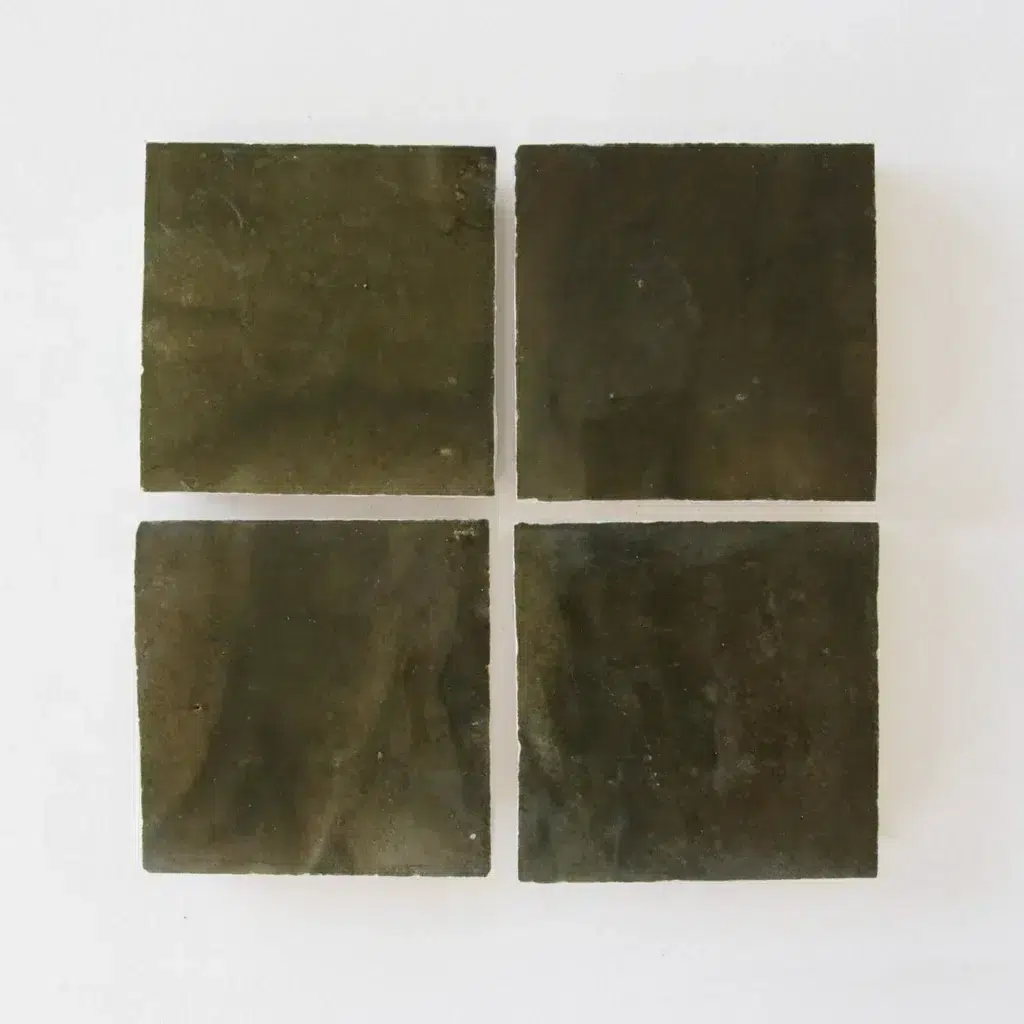
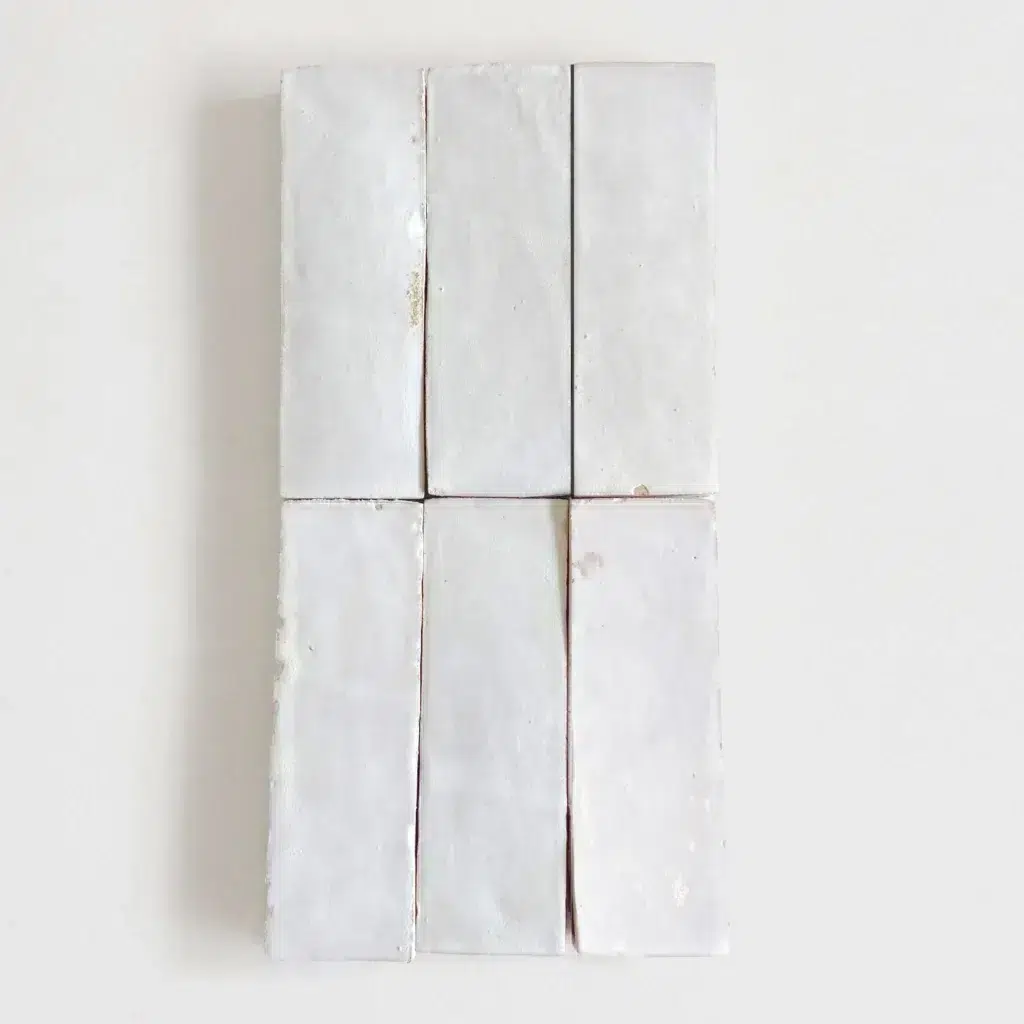
Each tile below is a real Arta product. Open a page for colours, format and sample options.


What zellige is
Zellige is a traditional Moroccan tile. Each piece is formed by hand from clay, glazed and fired, which is why no two tiles match exactly.
The charm lies in that variation. Edges are slightly irregular, surfaces ripple and the glaze pools in tone. A wall reads as crafted, not printed.
The craft has a long history in Morocco, and today designers and homeowners choose it well beyond its home.
Finishes and looks
Most zellige is glazed. The glaze catches light unevenly, so a plain colour looks layered and alive. Soft neutrals feel calm, while deep greens and blues feel rich.
Some zellige is left unglazed, with the natural clay showing. It is quieter and more matte, and it suits a very rustic room.
- Glazed: depth of colour, gentle shine, easy to wipe.
- Unglazed: raw clay tone, matte, needs more care.
Colour deepens where glaze is thick and softens where it is thin. That is why a single colour never looks flat. Light from a window will move across the wall through the day.
Where zellige works
Zellige is a favourite for kitchen backsplashes, bathroom walls, shower surrounds and fireplace faces. A small 4 × 4 in tile gives a wall a hand-laid rhythm.
Plan for the variation. Mix tiles from several boxes as you lay them so tone spreads evenly across the wall. Expect slightly wider grout lines than with a machine-made tile.
Zellige looks best when you resist forcing it to be perfect. A straight, even layout with relaxed grout lines lets the handmade character show. Tight, perfectly even joints work against the material, so ask your installer for a relaxed hand.
Caring for zellige
Glazed zellige wipes clean with a mild cleaner and a soft cloth. Skip abrasive pads and strong acids, which can dull a glaze.
Unglazed zellige is porous. It should be sealed after installation, with the product your installer recommends. Handle sealed grout the same way, because it also takes on stains.
Pair it with plain surfaces. White plaster, oak, honed stone and matte black or brass fittings let the tile be the one expressive element in the room.
How to choose
Choose the finish first. Glazed for brightness and easy care, unglazed for a raw clay look. Then choose a colour in your own light, since glaze changes a lot between daylight and lamps.
Work with an installer who has set handmade tile before. Good setting is half of the finished look.
If you are tiling a large area, plan the order of boxes before you start. Good planning keeps tone shifts looking intentional and natural.
Common questions
Is zellige tile handmade?
Yes. Traditional zellige is shaped, glazed and fired by hand, which is why tone, edges and surface vary from tile to tile.
Is zellige good for a kitchen backsplash?
Yes. Glazed zellige is a popular backsplash, and it wipes clean with a mild cleaner.
Why are the edges uneven?
Because each tile is hand formed. The unevenness is part of the look and is expected with real zellige.
Do I need to seal zellige?
Glazed zellige usually does not. Unglazed zellige and the grout around it should be sealed. Follow your installer's advice.