
Heated Floors Under Tile: 6 Things to Settle Before You Install
A heated tile floor is a quiet comfort in a Montreal winter. Here is how one is built, what to tell your tile installer and your electrician, and what has to wait before you switch it on.
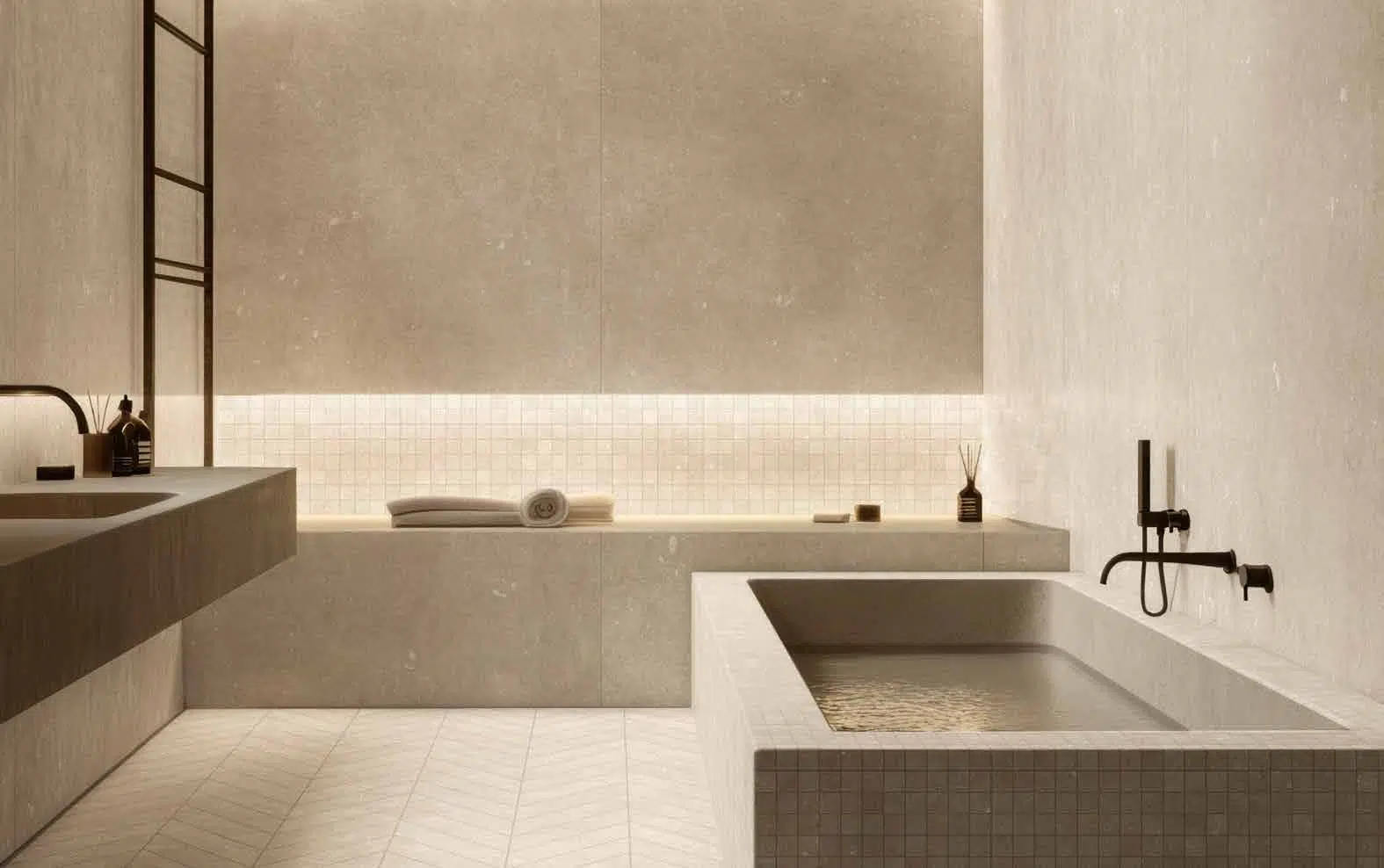
Electric or hot water: which one fits your floor
Both types heat the floor from underneath, and the floor then warms the room. Electric systems use resistance cables under the tile. Hydronic systems run warm water, or a water and glycol mix, through small pipes. A water system also needs a heat source such as a heat pump or a boiler, plus pumps to move the water (Natural Resources Canada).
For one bathroom or one kitchen floor, electric is the simpler build: no boiler, no pumps, a thin layer under the tile. Hydronic makes more sense when you are heating a whole floor and already building the water side.
One manufacturer, Schluter, says its electric system is made mainly to warm tile floors and make them comfortable underfoot. It can add to the room's heat, but how much depends on heat loss, room size, ceiling height and the outdoor temperature. Schluter does not calculate heating loads and points owners to an HVAC professional for that.
Which tiles work over a heated floor
Schluter lists ceramic, porcelain and natural stone tile for its electric system. Ask the maker of your tile for its own notes on heated floors before you order.
Size matters. The system calls for tile of at least 2 by 2 inches (50 by 50 mm). Smaller mosaics need a call to the manufacturer first.
Stone needs more care. Schluter recommends a double-layer wood subfloor under natural stone, and a longer cure after grouting. Its reason: stone varies a lot in strength. In a test it commissioned, the weakest travertine sample was only 14% as strong as the weakest ceramic sample. If you love stone, read our travertine guide and plan the subfloor with your installer.
The uncoupling membrane and the thinset
A heated floor swings in temperature, and that adds stress between the base and the tile. An uncoupling membrane sits between them to take up small movements. In Schluter's system the membrane has studs that hold the heating cable, so cable and membrane are one layer.
Tile can go over the membrane as soon as the cables are laid and tested. Fill the membrane with unmodified thin-set that meets ANSI A118.1, or with one of Schluter's own mortars (SET, ALL-SET or FAST-SET).
Ordinary latex-modified thin-set is the one to avoid. It dries slowly between two sealed layers, and the TCNA Handbook puts that drying time anywhere from 14 days to over 60 days. Self-leveling compound cannot go over the membrane, so level the floor first. Never cut the cable.
Why the floor sensor matters
The thermostat reads the floor, not the air. It depends on a sensor buried in the tile layer to know when to stop. Schluter requires a thermostat on every heating cable system and two floor sensors in the assembly. One connects to the thermostat. The other is a spare in case one breaks during the install.
Where the sensor sits counts. Schluter suggests placing each one between two cable runs, toward the middle of the layout and at least 12 inches (305 mm) in from the edge. A loose splice gives a false reading or an error code.
Schluter also suggests keeping the floor surface at 84°F (29°C) or lower for comfort. Ask your electrician to test the cable before the tile goes down, again once it is laid, and once more after tiling, and to write the numbers down.
Cure first, then switch it on
Schluter says to let the floor cure for at least 7 days after grouting before the warming goes into service. For natural stone, it recommends a longer cure after grouting.
In practice: if the grout goes in on a Monday, the earliest switch-on is the Monday after. Put the date on the job sheet so nobody turns the thermostat up early.
In Québec, a licensed electrician makes the connection
The Corporation des maîtres électriciens du Québec (CMEQ) says Québec law requires an electrical contractor for electrical work, whether or not you own the building. Its own list of examples includes changing a thermostat (CMEQ). The Régie du bâtiment du Québec (RBQ) says electrical installation work calls for a licence that includes subcategory 16, electrical contractor (RBQ).
Schluter's handbook asks for the same thing from the other side: a qualified person, working to the Canadian Electrical Code, Part I. It requires a thermostat for each enclosed area where a heating cable runs and a Class A (5 mA) ground-fault protection on each circuit. Its thermostats include that protection. In Canada, it says to confirm the thermostat location and the protection with your local inspector.
Your tile installer lays the tile. The electrician connects, tests and signs off the circuit. The CMEQ keeps a public directory of its members.
Sources
Read on November 14, 2026. Schluter-DITRA-HEAT Installation Handbook (electrical, sensors, mortar, curing, stone, space heating). Schluter DITRA-HEAT FAQ (minimum tile size, 7-day wait). CMEQ, Travaux d'électricité: faire le bon choix pour sa sécurité. RBQ, licence for electrical work. Natural Resources Canada, CanmetENERGY, radiant floors fact sheet. Schluter's notes cover its own system. Other brands have their own rules: follow your manufacturer's guide and your local code.
Common questions
Can I use a heated floor as my only heat?
Sometimes. Schluter says it depends on heat loss, room size, ceiling height and outdoor temperature, and it recommends an HVAC professional run the numbers.
Can I put heated floors under natural stone?
Yes, with care. Schluter lists stone tile for its system, recommends a double-layer wood subfloor under it and asks for a longer cure after grouting.
How long before I can turn it on?
At least 7 days after grouting with Schluter's system, and longer for natural stone.
What does it cost to run?
We do not quote a figure. We found no Hydro-Québec number for heated floors, and the cost depends on the room, the insulation and how long the thermostat runs. Ask your electrician for the system's wattage.