
Travertine Tiles: Honed, Tumbled or Polished
Travertine is a natural stone in creams, beiges and soft golds, loved for its quiet texture and old-world warmth.
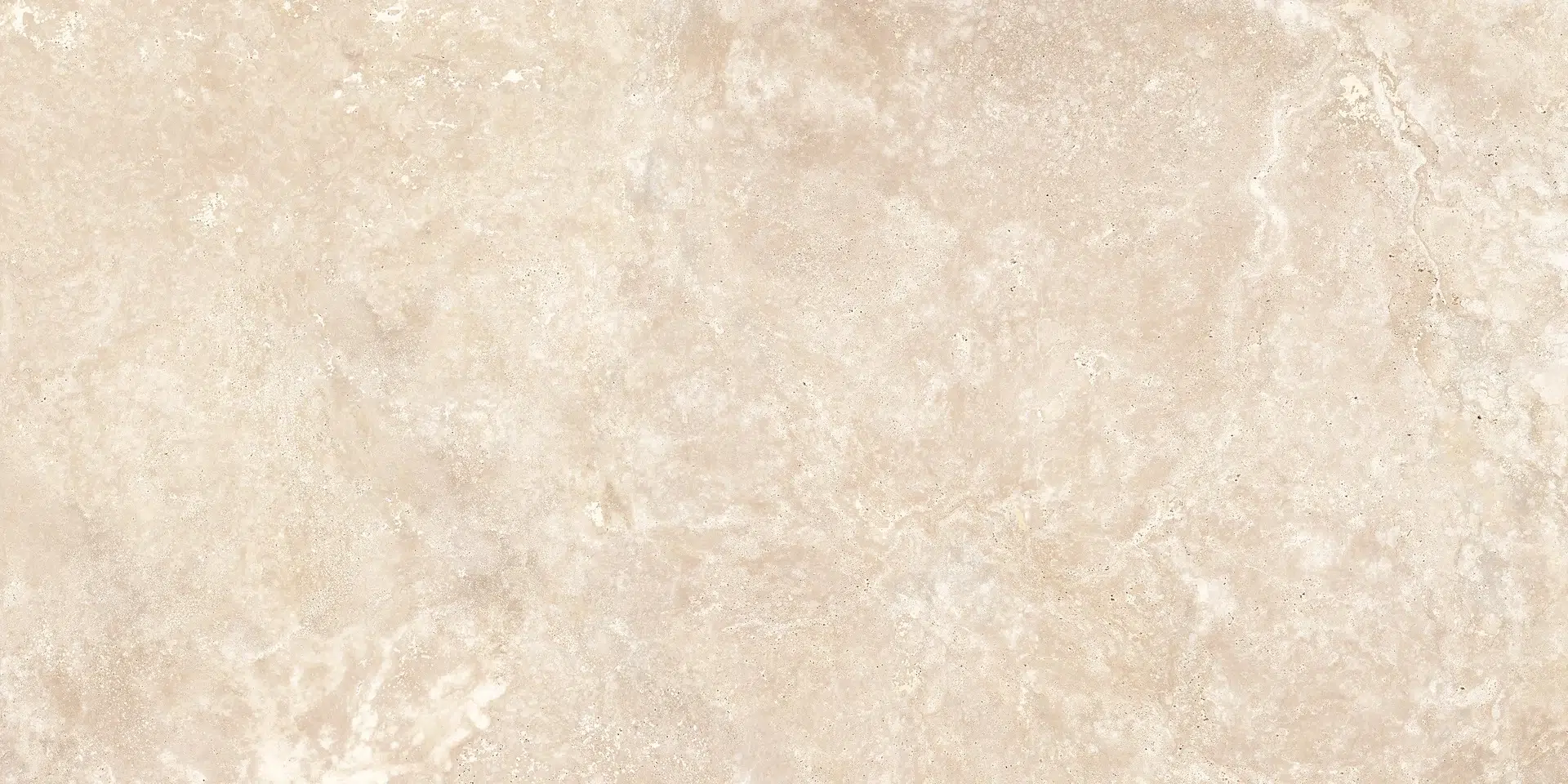
Arta's travertine collection
Each product below is a real Arta product. Open a page for colours, format and sample options.

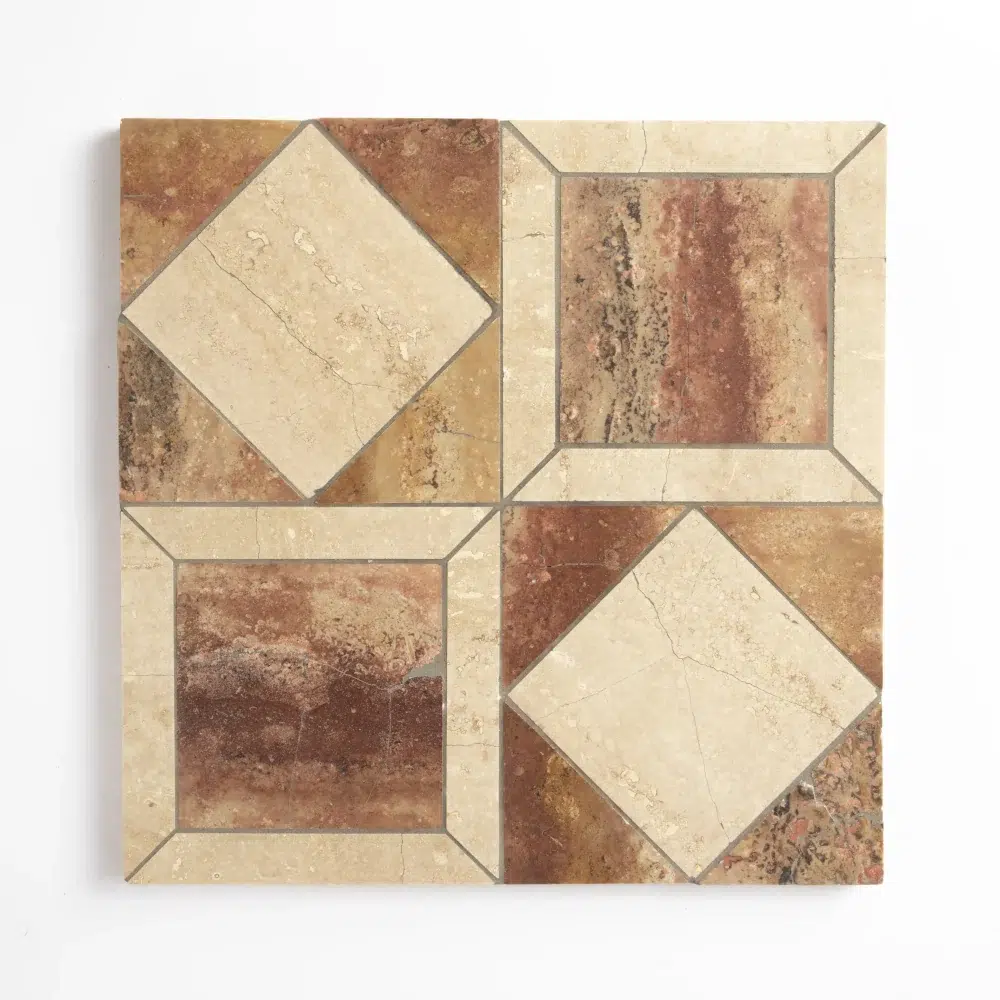
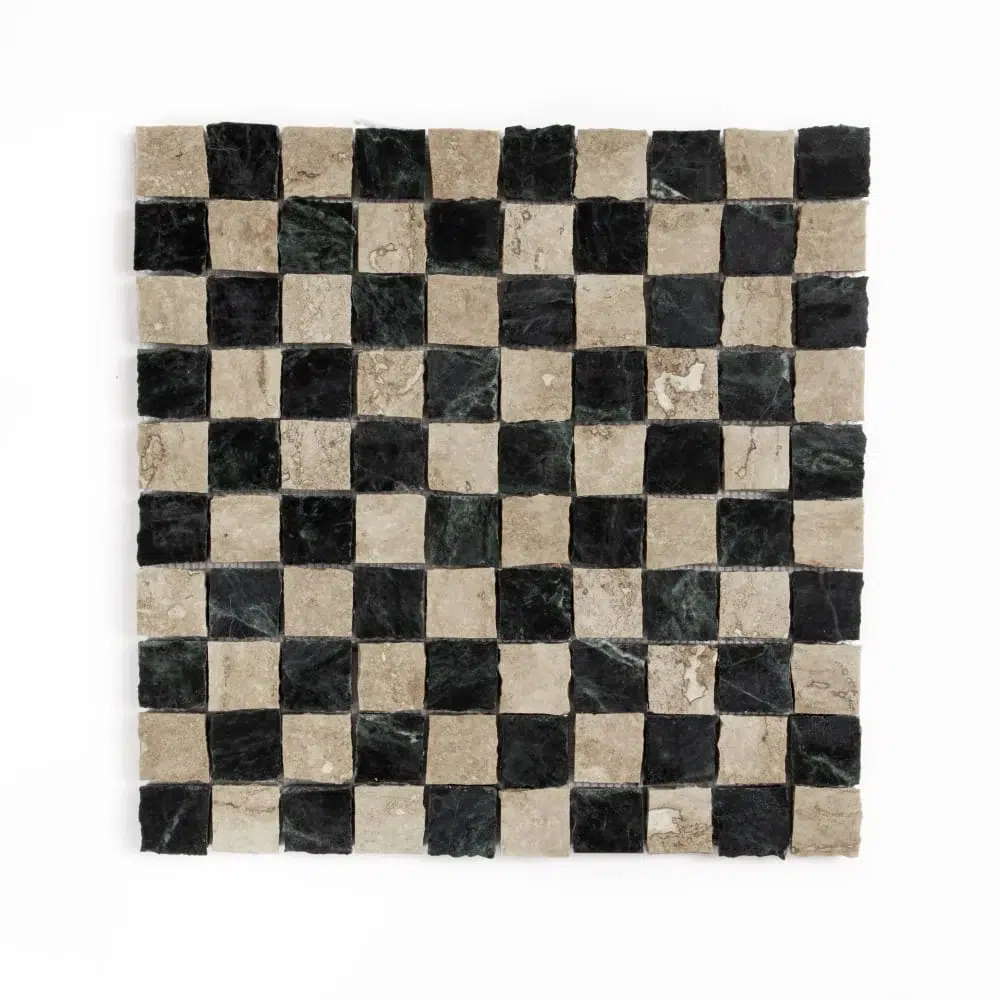


What travertine is
Travertine is a natural stone from the limestone family. It forms from mineral deposits, usually around springs, in layers that give the stone its linear, cross-cut pattern.
Small natural pores run through the stone. Some pieces have these pores filled at the factory, and others keep them open for a more weathered look.
Travertine has been used in building for a very long time, and it still reads as calm and grounded in a modern room.
Finishes and looks
The finish changes the mood of the stone as much as the colour does.
- Honed: smooth and matte, soft to the eye. The most popular finish for modern rooms.
- Tumbled: softened edges and a worn surface, a rustic, aged look.
- Polished: glossy and brighter, with colour that reads deeper.
- Brushed: lightly textured, with a natural grip.
Colours run from pale ivory to warm beige and gold, with occasional deeper tones. Mosaics in travertine add pattern without leaving the quiet palette.
Because the stone is natural, each piece shows its own banding and pitting. Ask to see more than one tile so you understand the full range before you commit.
Where travertine works
Travertine is at home on bathroom floors and walls, shower surrounds, fireplaces and kitchen backsplashes. Large formats look calm on a floor. Small mosaics bring texture to a niche or a wall.
It pairs well with other natural materials: wood, plaster, linen and aged brass. Keep the surrounding palette warm and the stone does the rest.
Floors in a large format feel continuous and quiet. In a small bathroom, a honed finish keeps the surface soft and gentle on the eye.
Caring for travertine
Seal travertine after installation and reseal as the installer recommends. Open pores take on stains if left unprotected.
Clean with a pH-neutral stone cleaner. Acidic products, including vinegar and some bathroom cleaners, can etch the surface of any limestone-family stone, so keep them away.
Matte surfaces are generally more forgiving underfoot in wet rooms. Ask your installer which finish suits the room.
Stone or stone look
If you love the travertine look but want a different material, a porcelain tile can carry the cloudy, cross-cut pattern. It is a separate product with its own care needs.
Ask yourself how much natural variation you welcome. Real travertine varies from piece to piece. That is the point, and a sample will show you the range.
Think of travertine as a background that gives other materials a place to sit. Wood, plaster, glass and metal all look at home beside it. When you compare options, set the tiles side by side in your own light and look at them at different times of day. Natural stone changes with the light, and that is part of its appeal.
Common questions
Is travertine a good choice for a bathroom?
Yes. It is a popular bathroom stone. Seal it, and use a pH-neutral cleaner so the surface stays even.
Does travertine need sealing?
Yes. It is a natural, porous stone. Sealing protects it from stains.
What is the difference between honed and tumbled travertine?
Honed is smooth and matte with crisp edges. Tumbled has softened edges and a worn, aged surface.
Can I get the travertine look in porcelain?
Yes. Some porcelain tiles reproduce the cloudy, cross-cut pattern. Arta's Travertino is one example in a 24 × 48 in format.